
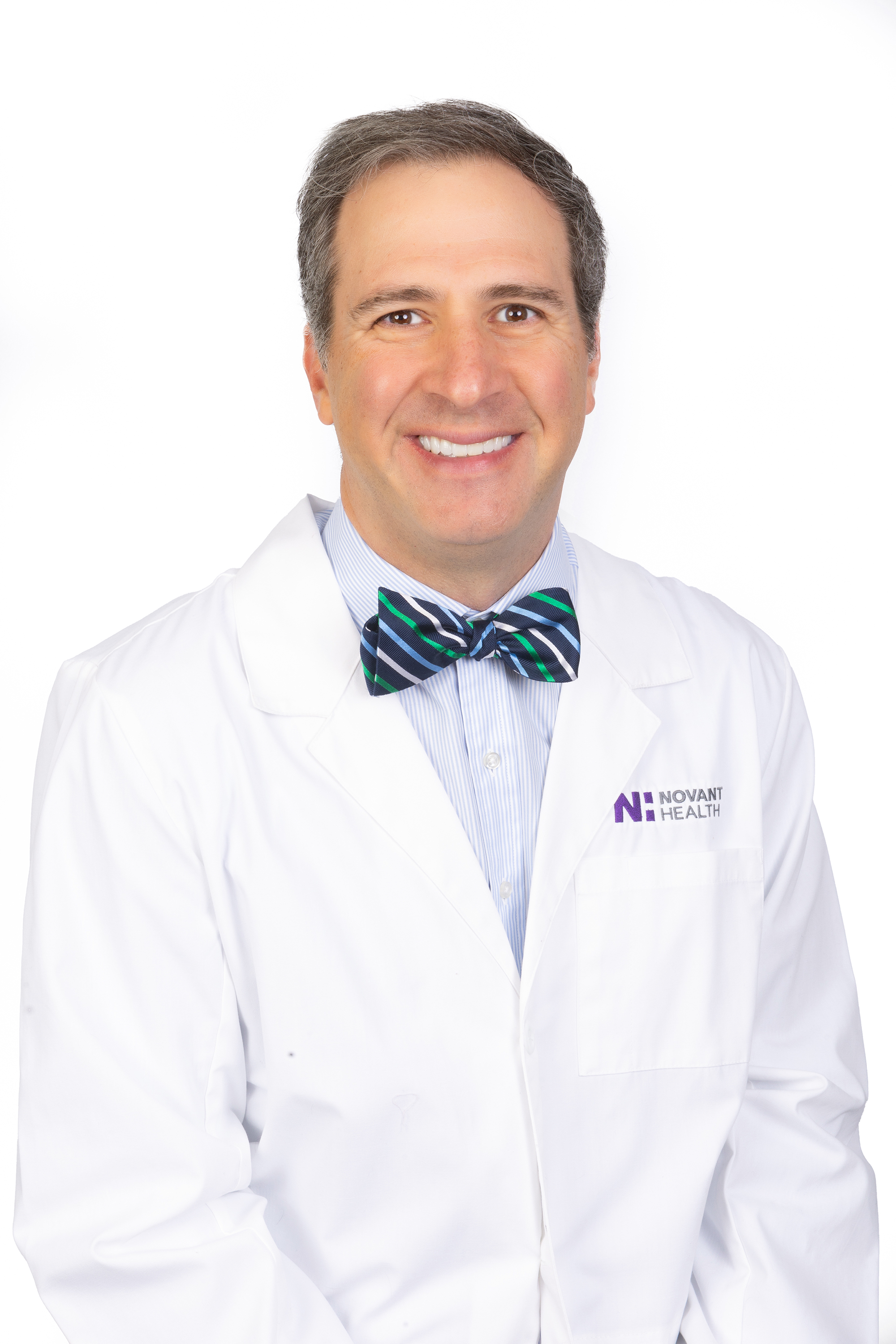
William Corey, MD, is a fellowship-trained foot and ankle orthopedic surgeon at Novant Health Orthopedics & Sports Medicine Institute. He treats patients of all ages and specializes in both nonoperative and surgical management of foot and ankle conditions.
Most referrals can be accommodated the same day or next day, depending on clinic availability. Referrals received over the weekend are typically seen on Monday.
What types of foot and ankle conditions are you most commonly referred for at Novant Health?
One of the things I enjoy most about foot and ankle surgery is the variety — I see something different every day. The most common referrals include acute injuries such as ankle sprains, foot and ankle fractures and Achilles tendon ruptures.
I also frequently manage chronic conditions, including arthritis of the foot and ankle, as well as deformities like bunions, hammertoes and flat feet. Overuse conditions such as Achilles tendinitis and plantar fasciitis are also very common reasons for referral.
Achilles tendon injuries remain common across age groups. When should referring providers consider early referral for possible Achilles tendon repair?
Achilles tendon ruptures should be splinted in plantar flexion and referred as soon as possible. Treatment should not be delayed.
For patients with end-stage ankle arthritis, how do you determine candidacy for ankle replacement versus other surgical options?
The decision between surgical options for end-stage ankle arthritis depends on several factors, including the patient’s age, comorbidities, activity level and occupation, degree of deformity and overall expectations. These variables help guide whether ankle replacement or alternative procedures are most appropriate.
Bunions are frequently managed conservatively in primary care. What clinical or radiographic findings suggest it’s time to refer a patient for bunion correction?
Referral is appropriate when patients have failed conservative measures such as shoe wear modification. Surgical consideration is also warranted if the deformity begins affecting adjacent toes (for example, overlapping or underriding the second toe), or if the bunion causes persistent pain that limits shoe wear, daily activity or overall function.
Flatfoot deformity can range from mild to progressive collapse. How do you evaluate patients for flatfoot reconstruction, and which patients benefit most from surgical intervention?
Flat feet are common, affecting approximately 20%-30% of the population. When evaluating patients, it is important to determine whether the condition is congenital or progressive.
Adolescents with painful flat feet who fail conservative treatment, including immobilization and arch supports, may be candidates for surgery. In adults with progressive, painful flatfoot deformity that has not responded to conservative care, MRI is often used to evaluate contributing factors such as posterior tibial tendon dysfunction, spring ligament injury or arthritis. These findings help guide appropriate surgical management.
Refer to Dr. William Corey or Novant Health Orthopedics & Sports Medicine Foot & Ankle Institute
Most referrals can be accommodated the same day or next day, depending on clinic availability. Referrals received over the weekend are typically seen on Monday.
Call 843-971-9350 or fax 843-971-9351
How do you approach shared decision-making when discussing surgical versus nonoperative management for foot and ankle conditions?
I present both conservative and operative options, including the risks and benefits of each, and involve the patient in deciding when — or if — it is the right time to proceed with surgery.
What advancements in minimally invasive or modern surgical techniques have improved outcomes in foot and ankle surgery?
Advancements in minimally invasive surgery (MIS) have significantly improved outcomes. In bunion surgery, newer techniques have reduced recurrence rates and shortened recovery time.
MIS approaches for Achilles tendon repair allow treatment through smaller incisions, and these techniques are expanding into other procedures, including fusions and osteotomies. Additionally, improvements in total ankle replacement technology have led to better overall results.
How does your team coordinate postoperative rehabilitation and follow-up care to optimize long-term outcomes?
Physical therapy is initiated when it will improve recovery and optimize outcomes. When appropriate, we also coordinate home health services to support patients during the recovery process.
What distinguishes the Novant Health Orthopedics & Sports Medicine Institute as the ideal place for patients to receive specialized foot and ankle care?
I have more than 16 years of experience in foot and ankle surgery and personally manage each patient throughout their entire course of care. I incorporate the latest surgical techniques and offer both outpatient and hospital-based surgical options to best meet patient needs.
National leaders in orthopedic surgery & quicker recovery times