

If you’re headed for knee replacement surgery, you probably have questions — and you deserve answers.
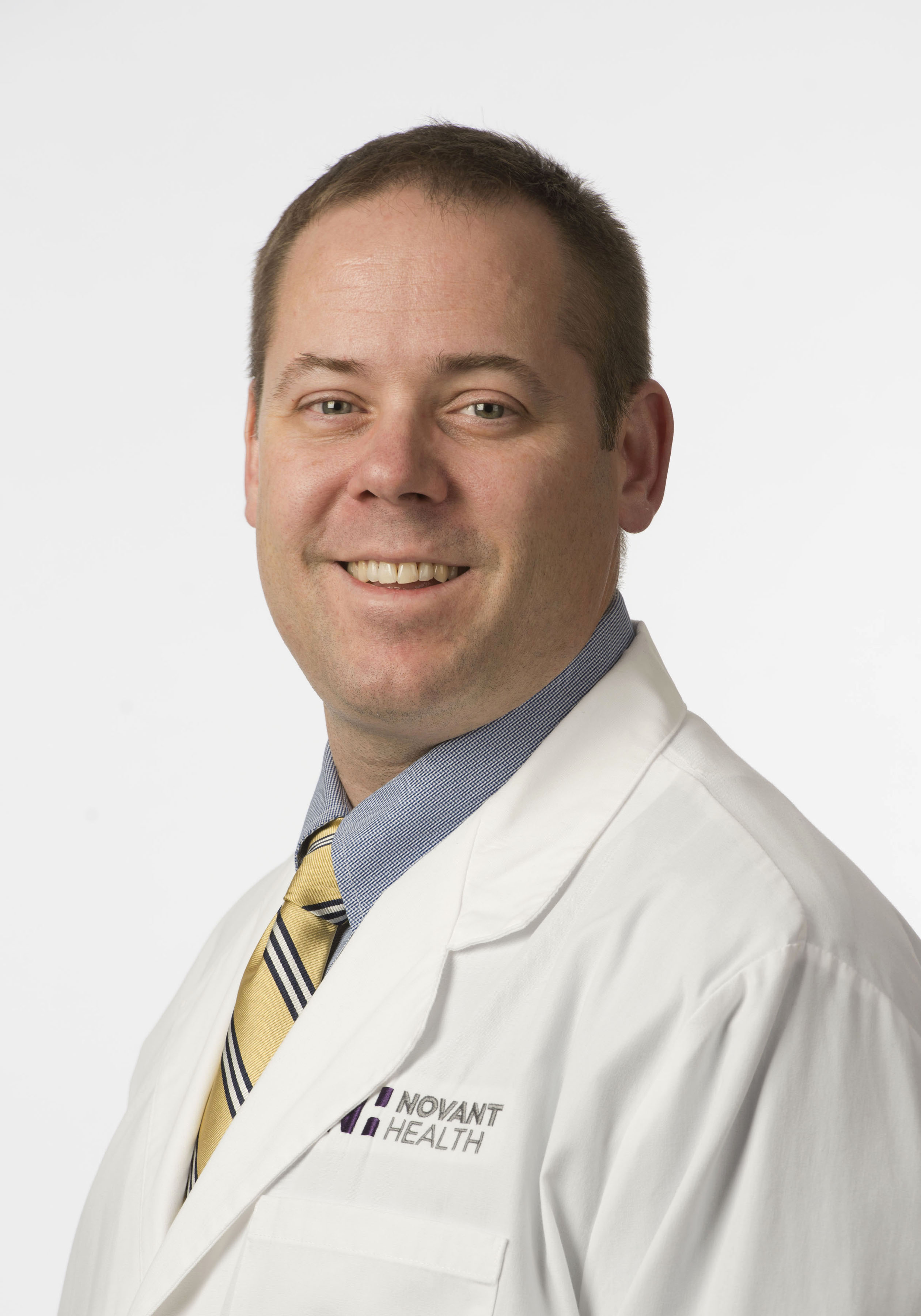
Dr. Jess Kirby of Novant Health Orthopedics & Sports Medicine - Cornelius has performed thousands of knee replacement surgeries. The first thing he’ll tell you: Recovering from knee replacement surgery is a marathon, not a sprint — but most patients are happy at the finish line.
Orthopedic care that combines leading-edge technology with ease and convenience.
What is total knee replacement?
In total knee replacement, a surgeon removes damaged parts of the knee and replaces all compartments of the knee joint with artificial parts. (As opposed to the less-common partial knee replacement, which involves replacing only a portion of the knee joint.) Total knee replacement is considered one of the most successful procedures in modern medicine, and is among the most frequently performed surgeries in the United States.
This surgery is typically recommended when knee pain or stiffness is limiting your daily activities and treatments like rest, medication, cortisone injections and physical therapy haven’t improved things. The goal of surgery is to get you moving again — without pain.
Total knee replacement is a major surgery, which carries risk — but if your surgeon recommends this surgery, they think the possible benefits outweigh your risks.
What to do before knee replacement surgery
1. Get to a healthy baseline.
Before surgery, your surgeon will prescribe exercises to improve your range of motion and strengthen the area around your knee. Doing these in the weeks before your surgery is “vital,” Kirby said, since a conditioned leg recovers faster.
Before being approved for surgery, you’ll need to get medical conditions like diabetes under control, and may be asked to lose weight. If you smoke, you’ll be asked to quit since smoking can impair wound healing. Going into surgery healthy will speed up your recovery and reduce your risk of complications.
2. Get your recovery supplies ready.
After surgery, you’ll need a walker, cane, shower chair and ice packs at home. Check what your insurance plan covers and purchase what you still need.
3. Build your support team.
You’ll need someone to drive you home when you’re discharged from surgery, and someone to be with you 24/7 for at least three days after surgery in case there’s an emergency.
You’ll need someone to drive you to appointments for up to eight weeks. For several weeks, you’ll also need help with daily tasks like pet care, getting groceries, cleaning and taking out the trash.
4. Meet with a physical therapist.
At Novant Health, you’ll meet with a physical therapist roughly two weeks before surgery. They’ll go through surgery and recovery details with you, “giving you knowledge so you can take some control of the process,” Kirby said.
The week before knee replacement surgery
You won’t be cleared for surgery if you have open wounds, scrapes, or cuts, so lay low: “It’s not the time to pull weeds,” Kirby said.
Eating a nutritious diet in the days leading up to surgery may help your recovery. If your surgeon gives you specific dietary guidelines, make sure to follow them.
Two days before surgery, you’ll wash your leg with special antibiotic soap, and will repeat this the next day.
Eight hours before your surgery, stop eating and drinking; if you don’t follow this rule, your surgery will be rescheduled.
What happens after knee replacement surgery
Directly following your procedure
After surgery, you’ll go to a recovery area. Once your anesthesia begins to wear off, you’ll be given clear liquids. If you can keep them down, your first physical therapy session will take place.
When you’ve completed the session and shown that you can climb stairs, get to the bathroom, and walk up and down the hall, you’ll be discharged. Kirby estimates that 70% of his patients go home the day of their surgery, but if you can’t meet those goals yet, you’ll stay in the hospital until you can.
Hospital staff will escort you to the car in a wheelchair; once you’re home, you’ll need your walker.
On the ride home, your leg will begin to swell. Once you’re home, settle somewhere comfortable, elevate your leg above your heart, and surround it with ice packs.
If you want to eat, Kirby recommends simple foods like broth and chicken noodle soup since you may still be nauseated from the anesthesia.
That evening, “there’s no need for a second physical therapy session — less is better early on,” Kirby said. “Ice, elevate, and control the swelling as best as you can, and sleep if you’re tired.”
Expect some pain: “The skin will be tight where the incision was and your muscles will be sore from being moved around,” Kirby said. “Expecting zero pain is not a fair expectation — but it should be less than a five on the pain scale.”
Most people take prescription pain medication for the first few days after surgery, along with acetaminophen and ibuprofen. You’ll be given a personalized medication schedule when you’re discharged. Kirby recommends setting phone alarms and recruiting your support person to help you stay on top of the schedule — and your pain.
Kirby understands if pain medication makes you nervous. “These medications are often needed so you can do the exercises, do your physical therapy sessions, and sleep at night and be ready to work the next day,” he said.
The first few days after surgery: Take it easy at home
The morning after surgery, wake up and do your exercises. Expect that your leg will be quite stiff in the mornings; it will loosen up as the day goes on.
Every few hours, do exercises for 3 to 5 minutes. In between, give yourself short walking challenges, like making it to the bathroom, the refrigerator or the next room.
Otherwise, rest with your leg above your heart. Stay on top of your medication, eat and drink as tolerated, and ice your leg for every 4 to 5 hours, or about three times a day when awake. Additionally, you can also ice for 10 to 15 minutes after exercise or when you have pain.
During this time, a physical therapist will come to your house and perform your first at-home physical therapy session. They will visit you at home for the next month, helping you get motion back, strengthening your leg muscles, and building your endurance. It’s important to keep these appointments and do your “homework” Kirby said.
Getting more active may hurt, “but pain shouldn’t be a 9 or 10 on the pain scale — if you’re having that much pain, let your doctor know,” Kirby said. If pain is limiting your ability to perform physical therapy exercises, take your pain medication 30 minutes before you do your exercises.
Your task for these days is to begin recovering from the stress of surgery, begin getting mobile again inside your house, and complete that first at-home physical therapy session. Your motto: “Take it easy.”
Your other job: Avoiding injury. “Use your walker to get around, and be careful — falling can have all kinds of bad consequences,” Kirby said. In particular, be careful around pets and children.
Call your surgeon’s office if you fall or if you’re having severe swelling, a lot of pain, nausea or constipation. Call 911 if you have chest pain, shortness of breath or lose consciousness.
One week after knee replacement surgery: Stay close to home and build on your progress
One week after surgery, take that walker for a slightly longer journey — maybe to the mailbox instead of the kitchen. If that goes well, add a few feet to your walk the next day. “Balance rest, healing, and building,” Kirby said.
By now, your knee is working a lot better — but don’t overdo it.
“You can definitely do too much, and you’ll notice when you do because it will swell up,” Kirby said. “If you’re getting a lot of swelling, back off — it’s telling you that it’s not ready to ramp up.” Treat swelling by resting, elevating your leg, and applying ice packs, and accept the help you need with everyday tasks.
Your physical therapist will continue coming and will tell your surgeon how you’re healing; if things aren’t going as expected, you may be called in for an appointment. Otherwise, you won’t see your surgeon until two weeks post-surgery.
A week after surgery, many people have stopped taking prescription pain medication, although most still take acetaminophen and ibuprofen on a schedule throughout the day. If you’re still having a lot of pain, reach out to your surgeon.
Most people stay home this week unless they need to see their surgeon. Kirby recommends that you avoid traveling more than 15 to 20 minutes by car for the next few weeks due to your risk of blood clots.
Set goals to keep you motivated — for example, “if I keep doing my exercises every day, I could graduate to a cane in the next week or two.”
One month after knee replacement surgery: Less pain, more mobility
Your knee isn’t healed yet, but it’s getting there.
By now, most patients have transitioned from home physical therapy to outpatient physical therapy. Sometime this month, your physical therapist may recommend using a stationary bicycle or elliptical machine without resistance. In another month, you may graduate from physical therapy altogether.
Swelling is inevitable: “Everyone’s knee swells, gets warm, and gets red with activity after a total knee replacement,” Kirby said. But if your knee seems more swollen or red than usual, or if it’s gotten red when you haven’t been active, reach out to your surgeon.
By one month after surgery, most people are taking acetaminophen and ibuprofen as-needed instead of on a schedule.
You may have already returned to work if you work remotely and are able to take frequent movement breaks. But if your job involves commuting or sitting all day, you’ll need eight weeks off work after surgery, and if your job involves manual labor, you may be out for three months or longer, Kirby said.
By one month after surgery, most people have moved from the walker to a cane; once you’re using a cane with ease, you can start experimenting with light chores.
Occasionally, patients are cleared to drive now, but Kirby said it’s more typical to need up to eight weeks to recover. Your surgeon can evaluate your situation.
In the next few weeks, you’ll likely feel comfortable walking without the cane. Two months from now, you’ll still have inflammation in your knee — but pain is usually gone. And in three to five months, you’ll likely have your full range of motion back.
One year after knee replacement surgery: Your new normal
One year after surgery, you should be used to life without knee pain.
Your knee may get stiff if you’ve been inactive for a while, and may still swell occasionally, “but the knee tends to feel better even if it’s warm or swells,” Kirby said.
You should be back to most of your favorite activities — minus high-impact exercise like running and jogging, since the spacer put in your knee during surgery is not designed for impact.
“If someone’s chasing you, you can run away, but don’t run a marathon,” Kirby said. “You can walk a marathon, or do any other low-impact exercise you want to.”
You should also be used to your new knee.
“It’s not the knee you were born with — it’s mechanical, and you’ll feel things click,” Kirby said. “It will feel different.”
But with time, Kirby said, most people adjust and stop thinking about it.
Your knee problem didn’t develop overnight. Recovery isn’t overnight either.
When you go through a major surgery like this, “it’s not just knee recovery — it’s whole-body recovery,” Kirby said. “You’ll be working on recovery for many weeks. If you can have that perspective, you won’t be so frustrated.”
And keep the end goal in mind: “Total knee replacement gets people back to doing healthy and active things, which makes them feel good and live longer,” Kirby said. “Big picture, it’s a great operation.”


