

Despite being healthy, active and just 42 years old, Martha Fuller suffered a massive “widow maker” heart attack causing her heart to stop in May 2026. Her husband kept her alive with CPR until paramedics arrived, and specialists at Novant Health Forsyth Medical Center used advanced interventions to save her during a life-threatening series of complications.
Doctors later discovered she had elevated lipoprotein(a), or Lp(a), a little-known inherited risk factor for heart disease that affects an estimated 1 in 5 people.
Here’s Fuller’s story — and what you should know about the inherited risk factor that may have contributed to her heart attack.
In college, Pat Fuller’s role as team manager for the football team required him to know CPR.
He’d never had to use it, so when his employer offered a CPR course in the fall of 2025, he took it to refresh his memory. He had no way of knowing how soon he’d need it to save the life of his wife, Martha. She calls the timing “a miracle.”
Martha didn’t fit most people’s image of a heart attack patient. The mom of two busy boys — who were 4 and 5 at the time of her heart attack — exercises five to seven days a week and eats healthfully.
The week before her heart attack, Martha’s heart started hurting while she and Pat were walking to their car after a concert. Pat suggested they go to an ER, but Martha felt fine after taking a short break. Because she’s a runner and in such good shape, it didn’t occur to her it could be serious.
But on May 4, that same troubling feeling returned at about 4 a.m. Martha woke Pat to tell him, then walked to their bathroom. That’s the last thing she remembers.
Pat heard a thud, rushed to the bathroom and found Martha face down. She’d hit her head on the tub as she was falling. Pat turned her over, called 911 and began chest compressions, which he continued for 10 minutes.
“All the medical professionals told us that people usually tap out after three or four minutes because it’s exhausting,” Martha said. “But Pat said there was no way he was stopping until the medics got here.”
Expert care to keep your heart strong and healthy.
Treating a ‘widow-maker’ heart attack
Once medics reached the Fuller home, Martha had no pulse and was in ventricular fibrillation, which is a life-threatening abnormal heart rhythm where the heart’s lower chambers quiver rapidly and the heart fails to pump blood.
Knowing CPR could help you save a life
Martha Fuller’s story of surviving a “widow-maker” heart attack would’ve had a different ending if her husband, Pat, hadn’t known CPR.
“There's 100% certainty that, if her husband hadn't been there and done such effective CPR, she wouldn’t have survived,” said Dr. Philip Keith, a critical care doctor.
CPR is a skill we all should have, said Dr. Sam Turner, who treated Martha in the ER and is now her cardiologist. “About 70% of cardiac arrests occur in the home,” Turner said. “It’s very important for the public to understand how to do effective CPR.” When someone receives CPR from a bystander during cardiac arrest, they can be two to three times more likely to survive.
The American Red Cross offers CPR classes in person and online. Novant Health offers free online infant and child CPR classes. Click here to view Novant Health's event calendar.
First responders used a defibrillator to shock Martha’s heart back into a normal rhythm. It took them five tries. In the ambulance, they alerted the hospital about the severity of Martha’s condition so the cardiac catheterization team could mobilize.
Doctors discovered Martha had 100% blockage in the left anterior descending (LAD) artery. Dr. Sam Turner, a cardiologist with Novant Health Cardiology - Kimel Park Main who would become the quarterback of Martha’s care team, placed a small tube called a stent in the artery to restore blood flow to the heart.
“But Martha’s heart was still too weak to function,” said Dr. Philip Keith, a critical care medicine specialist who helped care for Martha during her extended ICU stay. “And that left her in a state of shock with her organs failing.”
Dr. Jesse Madden of Novant Health Cardiothoracic Surgeons, who codirects the ECMO program with Keith, was called in to place her on ECMO, a form of life support that temporarily does the work of the heart, lungs or both.
ECMO, short for extracorporeal membrane oxygenation, is healthcare heavy artillery. Keith described it as “the highest form of life support for a failing heart or lungs; essentially a temporary heart and/or lung machine. We initiate ECMO when a patient’s mortality is estimated to be 80% or greater without it. In Martha’s case, she would not have made it out of the cath lab without it.”
‘The sickest person in the hospital’
Martha was critically ill. In fact, she “was the sickest person in the hospital,” Turner said. But she was in the right place.
That was critical, Keith said. “Forsyth has all the systems in place for someone as sick as Martha. All the resources are here, and the right people are here. She had a condition that, at many hospitals, she might have died from.”
Even as her heart began to recover, Martha’s oxygen levels became critically low. She had already been placed on a ventilator, but her oxygen levels showed little improvement. This development required Martha’s care to shift from a focus on cardiac support to a focus on lung support. ECMO was still required, but this time in a slightly different configuration.
ECMO can be used in two scenarios — for heart failure and lung failure. “Martha required both at different times during her stay,” Keith said.
The support that sustained them
All told, Martha was in intensive care for 16 days. She remembers none of it.
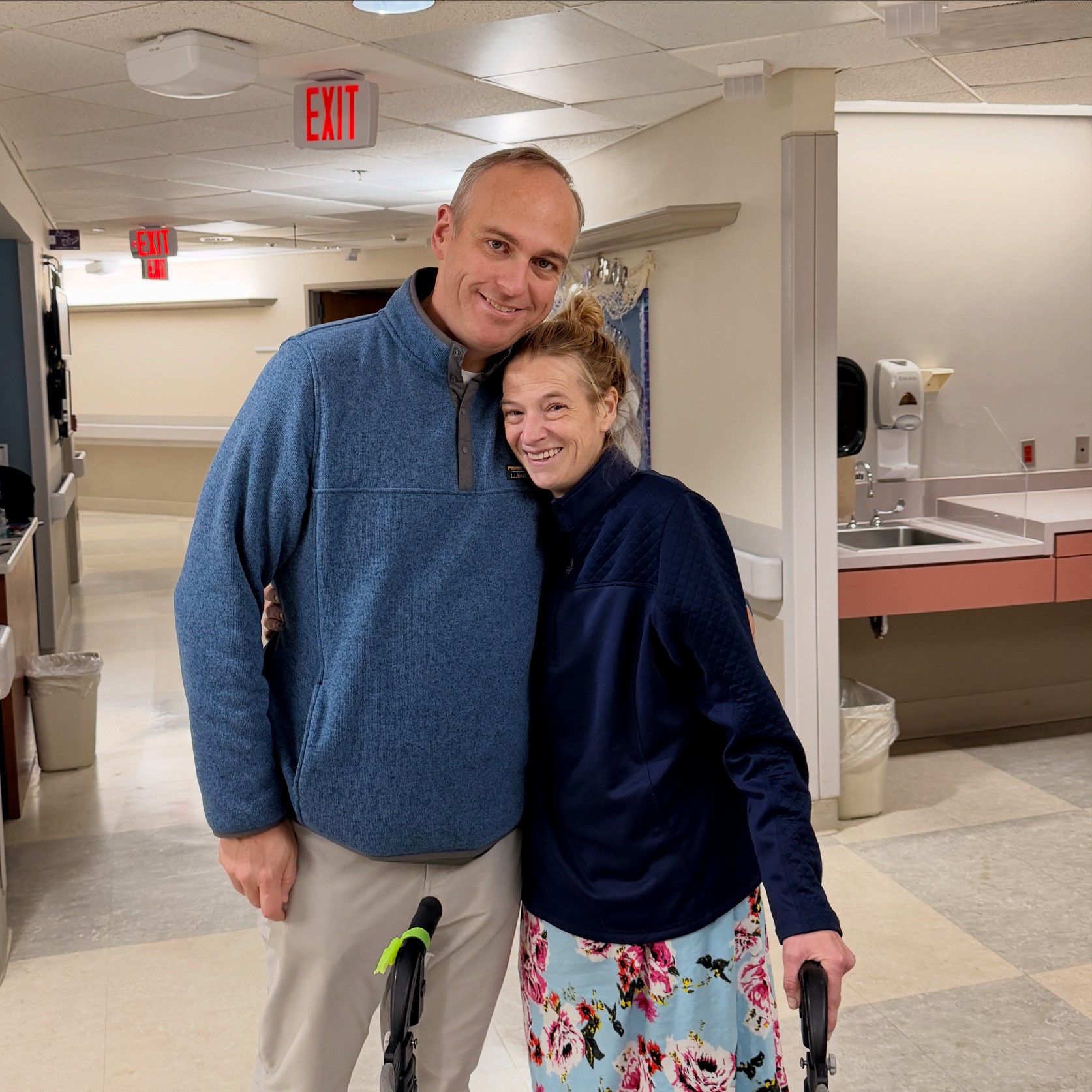
An entire village engulfed the Fullers. Their nanny worked 14- and 16-hour days while Pat was keeping vigil at the hospital. “He never left,” Martha said. “The ICU has limited visiting hours, and he sat in the waiting room all day, every day.”
Friends didn’t let him sit there alone. They sat with him. Some even came from out of town. They brought food, toothbrushes and toothpaste and antibacterial wipes to the hospital and “delivered meals to the house every single day in May and June,” Martha said.
“People gave DoorDash gift cards, made donations so we could pay our babysitter extra. People all over the world were praying for us. Our neighbors were in Italy when they found out, and they immediately went to a church and lit a candle for me. The outpouring of love and support from the community was mind-blowing. It sustained us.”
‘What have I missed?’
Eight days after she collapsed in her bathroom, Martha woke up surrounded by machines, doctors and someone asking: Martha, do you know where you are?
Because brain damage was a real concern, her care team repeatedly tested her memory: Do you know what day it is? What’s your last name? Where did you go to college?
Martha had questions, too: What happened? How long have I been here? How are the boys? What have I missed?
She’s relieved that she remembers “all the important stuff.” Some gaps remain, but memories continue to return. When Pat mentioned taking their sons to a local restaurant called T.J.’s for dinner one night, Martha responded, “I know I should know what that is, but I don’t.”
“Baby,” Pat told her, “it’s the restaurant we go to every Friday.”
How healthy is your heart?
Take three minutes to help assess your risk for heart disease.
Recovering from a massive heart attack
Before Martha could leave the hospital, she had to relearn basic tasks like walking, using the bathroom, even swallowing.
Being dizzy and nauseated made even standing up tough. But Martha was tougher.
“I’m stubborn,” she said. “I was like: We're doing this. I'm getting out of here and going home.”
After returning home, she experienced nighttime panic attacks and began working with a therapist and psychiatrist, Dr. Andrew Molitaris of Novant Health Psychiatric Medicine - Kimel Park. She credits Novant Health with doing “a phenomenal job of connecting me with the resources they told me I needed.”
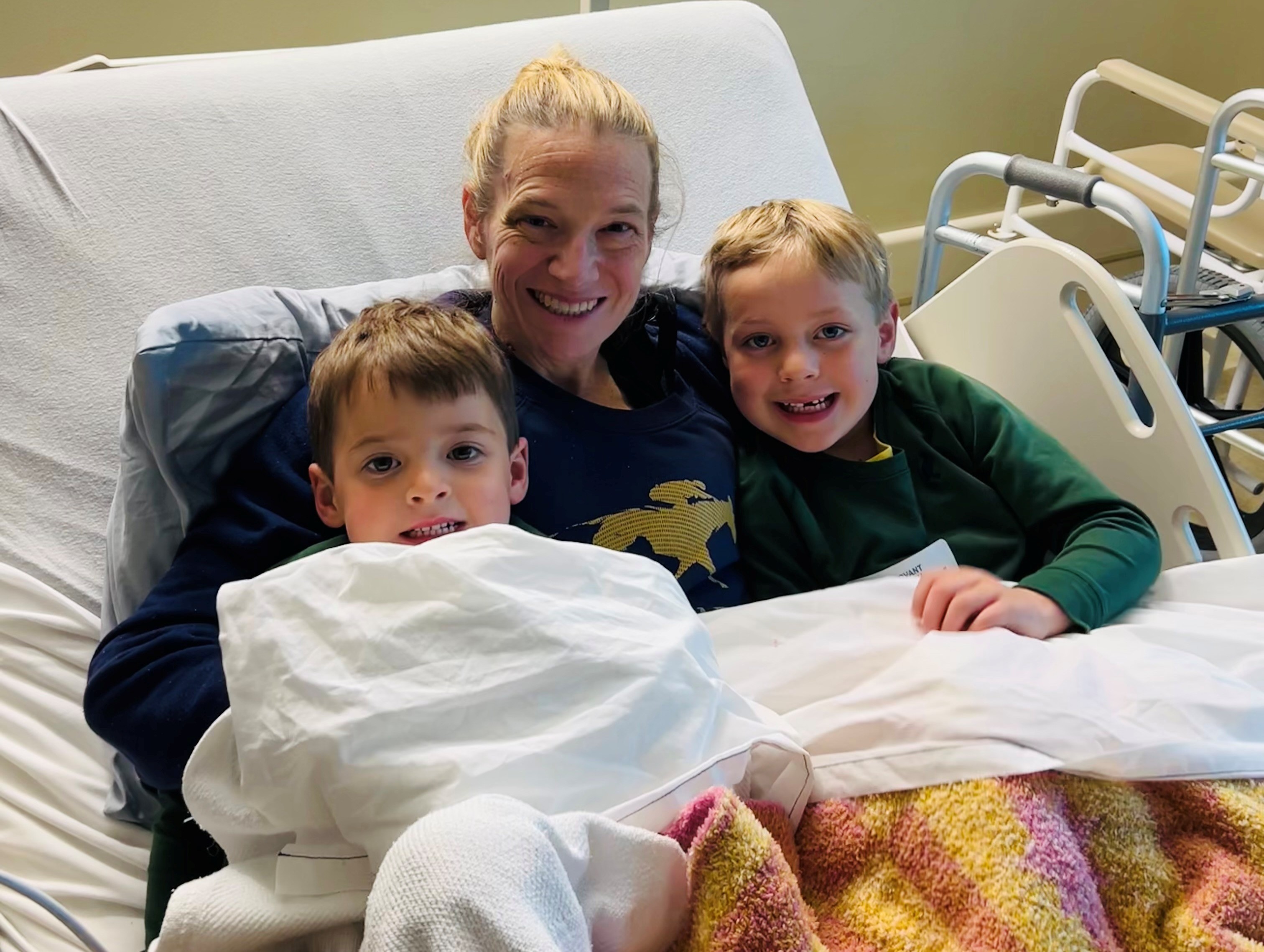
When she was discharged from the hospital, she still couldn’t go home; an inpatient rehabilitation facility was a necessary interim step. There, she was finally well enough to see her boys — a joyful reunion, although they never knew how sick their mom was.
She was in the hospital and rehab for a total of 26 days.
Once she was finally home, having to take things slowly was an adjustment for Martha, who describes herself as Type A. “People think that once you leave the hospital, you're better,” she said. “I was still sick for the first month after I got home. I couldn't get out of the chair, couldn’t walk by myself. I needed help showering and going to the bathroom. I still had a long journey ahead.”
Yet Martha’s medical team is in awe of how quickly she’s recovered. Today, Turner says she has few restrictions and can expect to “live a long, happy life with her husband and their two boys.”
Getting back to living
Martha says she considers herself “as back to normal as I think anyone could be.”She graduated from inpatient rehab to an outpatient cardiac rehab program through Novant Health. “It’s been amazing,” Martha said. “It’s given me the comfort to work out again. You’re hooked up to a heart monitor the entire time you're working out. You can see how much you can push yourself while staying in a safe heart rate zone.”
Martha works in risk management for a global beverage producer and feels lucky to have such a supportive employer. She received more paid time off than she actually needed. She made getting healthy again her full-time job, but went back to work Sept. 14 — sooner than she had to, because she was ready to resume normalcy.
Martha has been changed by what she’s lived through, in ways that are still revealing themselves. But so far, she says she notices that “little things I used to get annoyed with don’t bother me now.”
“God has given me a second chance at life,” she said. “I want to take full advantage of that and be a better wife, better mom, better sister, daughter, Christian. You hear about people who, at the end of their life, look back and wish they’d done things differently. I’ve been given that opportunity at 43, and it’s such a gift.”
The heart attack risk factor you may have never heard of (but should ask your doctor about)
You know about cholesterol. You may even know the good kind (HDL) from the bad (LDL).
But you may not have heard of lipoprotein(a), or Lp(a), an inherited type of cholesterol-carrying particle in your blood. Having elevated Lp(a) can increase your risk of heart attack and stroke.
One in five people may have it. And like Martha Fuller, most of them don’t know it.
Once Martha learned she had the condition, her sister was tested and discovered she has it, too. Their mother will soon have the blood test to determine if she does. Martha’s father had a fatal heart attack, but he had several known risk factors for heart disease.
Having elevated Lp(a) doesn’t mean you’re destined to have a heart attack, nor does it mean that, if you should, it will be as serious as Martha’s. It’s another risk factor like smoking, high blood pressure and diabetes.
“It indicates that a patient is at higher risk for developing heart and vascular disease — specifically, atherosclerosis, which is fatty buildup in the arteries,” said Dr. Sam Turner, an interventional cardiologist.
Should you get tested for Lp(a)?
The 2026 American Heart Association and American College of Cardiology guidelines recommend that all adults have their Lp(a) measured at least once in their lifetime, even if their regular cholesterol levels are normal.
Testing is particularly important if you have:
- A parent or sibling who had a heart attack or stroke at a relatively young age.
- A family history of elevated Lp(a).
- Familial hypercholesterolemia, an inherited condition that causes very high LDL cholesterol.
- Existing cardiovascular disease despite apparently normal cholesterol levels.
What to ask your primary care doctor: “I'd like to have my lipoprotein(a), or Lp(a), level checked to better understand my inherited cardiovascular risk. Can you order that blood test?”
One important detail: Lp(a) is largely inherited, and a single measurement is usually sufficient. If your level is high, your doctor can help determine whether you need management of other cardiovascular risk factors.


