Total Hip Replacement and Revision
Understanding hip replacement
Hip pain can make walking, sitting or standing difficult and uncomfortable. For many people, chronic hip pain is caused by arthritis, injury or other conditions that damage the joint over time.
When medication, physical therapy or lifestyle modifications are no longer effective, hip replacement surgery may be a solution to relieve pain and restore mobility.
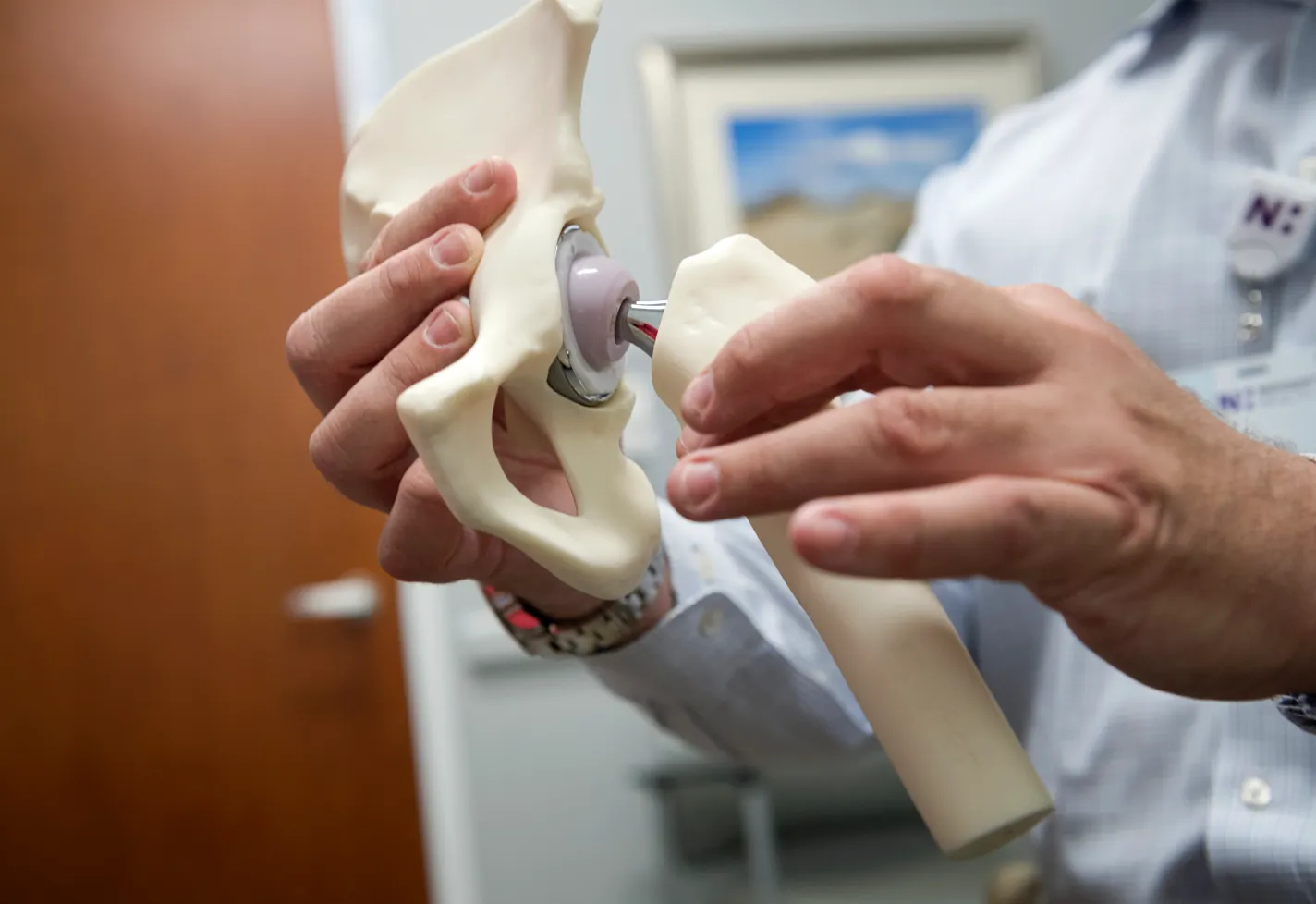
Total hip replacement is a surgical procedure in which the damaged parts of the hip joint are removed and replaced with an artificial joint, called a prosthesis. Artificial hips are typically made from a combination of metal, ceramic and hard plastic, designed to replicate the natural movement and function of a healthy hip.
Who may benefit from hip replacement
Hip replacement may be recommended for patients who experience:
- Persistent hip pain that limits daily activities
- Stiffness that affects mobility and flexibility
- Difficulty walking, standing, or climbing stairs
- Arthritis or other degenerative joint conditions
- Hip injuries that have not improved with nonsurgical treatment
Your overall health, activity level, and age are considered when evaluating candidacy for hip replacement. Our team takes a personalized approach, ensuring that your treatment plan aligns with your goals and lifestyle.
Total hip replacement basics
Learn why a total hip replacement is performed, explore hip anatomy and see the improvements surgery can make.
Videos in our patient education library are available to help you gain a general understanding of the condition or procedure. Read disclaimer.
Total hip revision and reconstruction
A total hip replacement is designed to last up to 20 years, but there are circumstances in which a revision or reconstruction may be necessary. Revision surgery may be needed if:
- The prosthesis has worn down or loosened over time
- The artificial joint is no longer functioning properly
- Infection affects the hip joint
- Complications arise due to injury or prosthesis failure
Revision surgery is more complex than the initial replacement. The skilled orthopedic surgeons at Novant Health carefully remove the old prosthesis and replace it with a new one, restoring function, reducing pain and improving mobility. While recovery may take longer than the initial procedure, revision surgery can help patients regain comfort and return to daily activities.
The hip replacement procedure
Hip replacement surgery is typically performed in a hospital or specialized surgical center under anesthesia. During the procedure:
- The damaged cartilage and bone are removed from the hip joint.
- The prosthetic components are carefully inserted and positioned to restore alignment and function.
- Minimally invasive techniques may be used to reduce incision size, preserve healthy tissue, and support a faster recovery.
Following surgery a personalized rehabilitation plan helps patients regain strength, flexibility and confidence in their new hip. Physical therapy, gentle exercises and gradual return to daily activities are key components of successful recovery.
Conditions we treat
Our expert team delivers expert care for a wide range of joint injuries and conditions.

Is joint pain holding you back?
It only takes a few minutes to help you stay active for years. Our joint health quiz shows you how to stay strong, flexible and moving freely through every stage of life.
Take the next step
Our board-certified specialists are here to help you heal. They can often diagnose the problem in one visit and get you started with a personalized treatment plan. We offer a wide variety of treatment options.