

Michelle Farrington knows that performing a mammogram is only part of her job.
Patients come into the Novant Health Breast Center in Winston-Salem for many reasons. Some are there for a routine annual screening. Others have been called back for additional imaging and arrive afraid and uncertain.
After 27 years in healthcare, Farrington, a mammography technologist, has learned to recognize what each patient may need in that moment, developing what she considers an ability to “read the room.” This helps her recognize when someone needs more explanation, a slower pace or simply a comforting presence.
“Every patient is different as far as what they need, and just giving them a little extra time, answering questions so they know what to expect, or giving a hug, gives them reassurance,” Farrington said. “That goes a long way, and it boosts them.”
Mammograms save lives. Schedule yours today.
Routine mammograms are crucial because they can detect breast cancers before they can be seen or felt. But when screenings lead to additional diagnostic imaging or a biopsy, the way patients are cared for matters, too.
For patient Fran Harrington, some extra reassurance made an uncertain week a little easier.
Harrington, 71, has spent the last 30 years raising a family with her high school sweetheart, going to church, working as an educator, becoming a grandmother and building a comfortable life in the Huntsville community of Yadkin County.
She has also made annual mammograms part of her routine, returning every year to the Novant Health Breast Center in Winston-Salem.
So when her annual reminder arrived last year, Harrington scheduled her mammogram and expected the visit to be like all the others.
This time, it wasn’t.
Her mammogram detected an abnormality she couldn’t see or feel. She immediately thought of her younger sister, who had been diagnosed with breast cancer five years earlier.
“Oh gosh, what’s going on?” she remembered thinking.
What followed were several anxious days of additional imaging, a biopsy and waiting for answers.
When Harrington returned to the breast center for additional testing, she met Farrington and shared how worried she was. Farrington helped her understand what the imaging team was looking at and offered reassurance during an understandably frightening moment.
And then she gave her a hug.
For Harrington, who describes herself as “a hugger,” the simple gesture provided exactly the comfort she needed.
Farrington explained that the abnormality seen on Harrington’s imaging was microscopic. Harrington returned the next day for a biopsy. Farrington happened to spot her between patients.
There was another hug.
A few days later, Harrington received the news she had feared: She had breast cancer.
But it had been caught at stage 0. Also known as ductal carcinoma in situ, or DCIS, the abnormal cells were contained inside the milk ducts and had not spread into surrounding breast tissue.
“I’m glad that I kept up with my yearly mammograms,” Harrington said. “I want everybody to get their mammograms because catching it at this stage makes all the difference in how to treat it.”
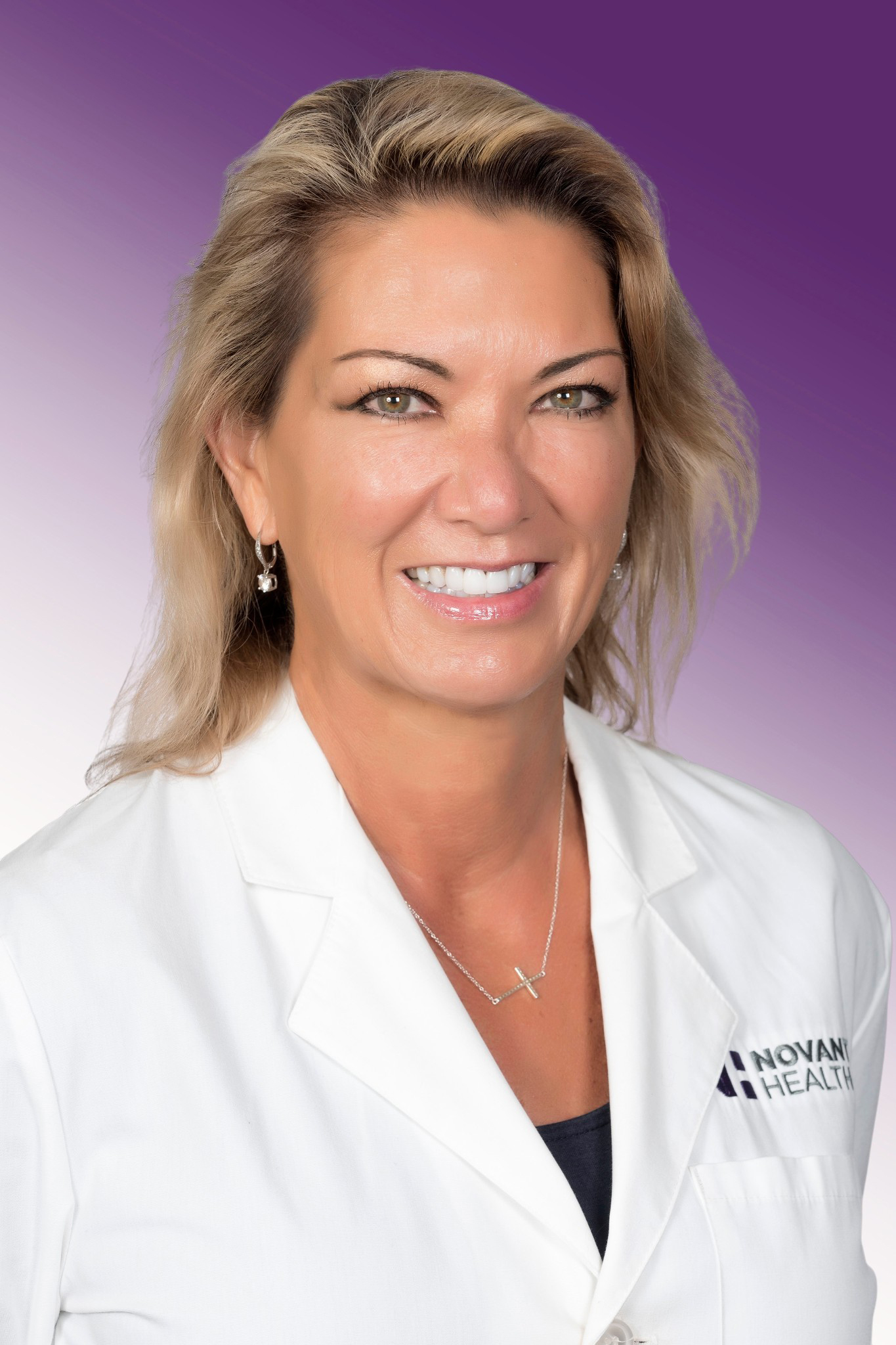
Harrington underwent a unilateral mastectomy in fall 2025 with Dr. Lori Kellam of Novant Health Breast Surgery in Winston-Salem. Medical oncologist Dr. Erin Jepsen recommended estrogen blockers, and Harrington did not require chemotherapy or radiation.
“Stage 0 breast cancer is the earliest form of the disease, but every patient’s situation is different. If the abnormal cells are extensive or located in multiple areas of the breast, a mastectomy may be recommended, which was the case for Fran,” Kellam said. “Our goal for is to recommend the treatment that gives each patient the best outcome while helping her understand and feel confident in the decisions ahead.”
A year later, Harrington returned to the breast center for the annual mammogram of her remaining breast.
This time, she had a special request: She wanted to see Farrington.
And, of course, there was another hug.
“Nothing helps me more than somebody giving me a hug,” Harrington said. “That makes me feel like I’m going to be OK.”
When Harrington talks about the experience now, she remembers not only the medical care she received at the start of her cancer journey, but also the person who helped her through what came next.
“It’s a blessing to me that she came into my life,” Harrington said of Farrington. “Compassion for one another is just so important. She knows how to be that and show it,” she said. “She helped me through a really hard time.”


