
Humor is one tool cancer patients might use to cope with their illness, perhaps because laughing helps keep the tears at bay.
Joan Eyster used humor when she requested prayers for her husband, Bob, from the church choir they belong to. Bob was among the fewer than 1% of all U.S. men diagnosed with breast cancer. It can happen to even the toughest, most macho men — like the retired NYPD cop who was a first responder on 911.
To make Bob’s case even more unusual, it happened about a year after his wife had been treated for the same disease.
“I had to add a little humor,” Joan said. “I told our choir friends: Bob’s going to have a double mastectomy — but no reconstruction."
Mammograms save lives. Schedule yours now.
Breast cancer: Part 1
Joan is a retired nurse who’s always been diligent about breast self-exams. She had never noticed anything suspicious, so it was a surprise when a small lump was discovered during a routine mammogram in August 2024.
“I hadn’t felt anything, but the mammogram from the previous year had a little pinhead of white,” she said. “The area where cancer was found was in the same spot.”
It was caught early — before it could spread. Joan needed a lumpectomy, but the Eysters had a prepaid trip coming up they didn’t want to miss. Calvary Baptist Church’s Voices in Praise (VIP) choir takes an annual mission trip out of state to bring a joyful noise to incarcerated men and women. They primarily sing in prisons.
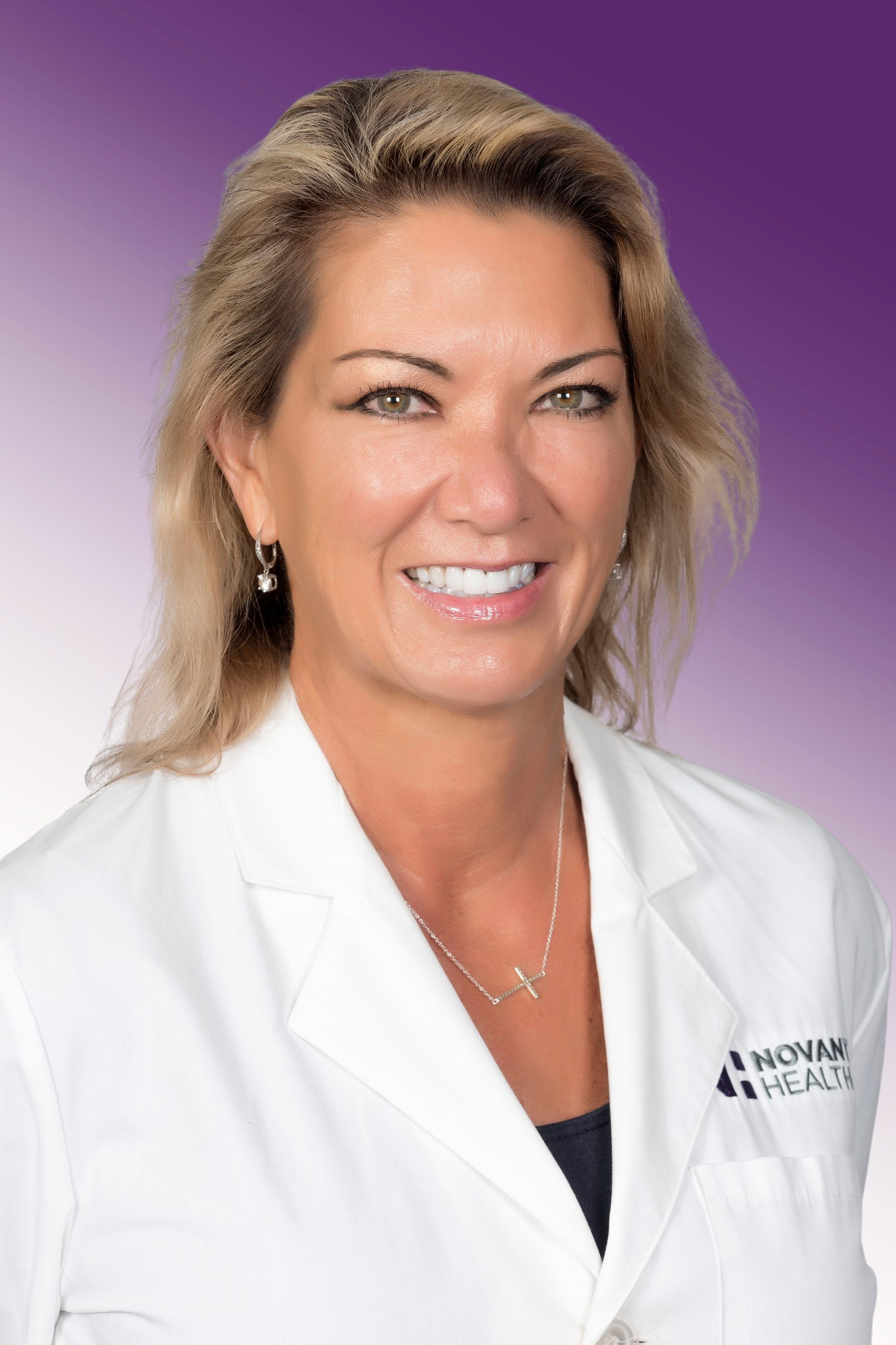
"Because Joan’s cancer was found early and was slow-growing, taking the trip didn’t impact her prognosis," said her surgeon, Dr. Lori Kellam of Novant Health Breast Surgery - Ardmore. So, Kellam gave her blessing to delay surgery until after the trip.
Kellam performed a lumpectomy in October 2024. Surgery was followed by five doses of radiation to reduce Joan’s risk of recurrence. “I had a very easy recovery and no side effects from radiation,” she said.
Breast cancer: Part 2
About a year later, Bob, a former test engineer for Aircraft and Marine Products (AMP — later Tyco International), found his cancer, which proved an even bigger shock to him than Joan’s was to her.
He’d gotten a clean bill of health at his yearly physical just a couple of months prior. But one day, while taking a shower, he “felt a lump where there shouldn't have been one.” It felt solid and hard; Bob likened it to a marble.
He checked with his in-house medical expert — his wife, the retired RN — who urged him to go back to his doctor. The doctor sent Bob for a mammogram. “So, at 81,” he quipped, “I had my first one.”
He also had an ultrasound and then a biopsy, which revealed invasive ductal carcinoma of the right breast. As a man with breast cancer, Bob was now “a member of the 1% club,” he said.
The couple’s fellow choir members and others at their church had prayed for Joan during her cancer treatment. And now they did the same for Bob. “Though I had a diagnosis of ‘the big C,’ I wasn't frightened,” he said. “I had a peace and calm about it that I’ve never experienced before in my life.” He attributes that, in large part, to the power of prayer.
Kellam, the surgeon who operated on Joan, performed a bilateral mastectomy on Bob. She removed the right breast to remove the cancer, and also removed the left breast because genetic testing showed that Bob had the BRCA2 gene mutation. That increased the risk for breast and several other cancers.
“Breast cancer in men is rare,” Kellam said. “And although mastectomy is a common option, some men do qualify for partial mastectomy or lumpectomy, which is usually followed by radiation.”
Although Bob had major surgery, he fared well. His wife became his primary caregiver, when he needed one, after surgery. “He was an excellent patient,” she said. “And he had a smooth recovery.”
He left the hospital with two drains to remove excess blood and lymphatic fluid that can build up in the empty tissue space.
Bob left Novant Health Medical Park Hospital in Winston-Salem with a prescription for a pain killer, which he said he never needed. But his in-house nurse advised him to take Tylenol pre-emptively. “I did it just to make Joan happy,” he said.
Take charge of your breast health
Assess your breast cancer risk with this quick three-minute quiz.
Preventing a breast cancer trilogy
Their daughter, Christine, knew there was a chance she’d inherited the BRCA2 gene. She, too, was tested. She, too, had the mutation, which increases a woman’s risk for breast and ovarian cancer.
“I met with a genetic counselor and went through what my personal risk was, based on this information and other risk factors,” Christine said. (Her risk for breast cancer was calculated at 70%.) Surgery was just one option. She could’ve opted to be screened twice a year. She chose the route she felt would give her the most peace of mind: a double mastectomy as a preventive measure and reconstruction.
But that BRCA gene mutation means a higher risk for ovarian cancer, too. “I'd already finished having children,” she said. “So, I had no issue having a total hysterectomy in March.” Dr. Elizabeth Skinner, a Novant Health gynecological oncologist, operated.
Today, daughter and parents are doing well. Cancer is in the past for Joan and Bob. And the surgeries Christine had as a precaution mean she lives her life without worrying about breast and ovarian cancer.
The Eysters hope that sharing their story sends a message. Joan said, “The main thing I want to convey to people is: If you find it early, you’ll do better.”


