Suspected hand fractures warrant emergent treatment if you are experiencing hand numbness and tingling, severe or “tight” swelling, significant deformity of the hand or any open wounds around the hand (possible open or compound fracture). Even without these warning signs, it is best to seek urgent treatment as the results of delayed treatment of metacarpal fractures can lead to undesirable outcomes such as nonunion (won’t heal) or malunion (heals crooked).
Nonoperative treatment
Splinting and casting support healing for stable metacarpal fractures that are not badly displaced (out of alignment). Occasionally, we need to numb the fracture and set it straight. Cast treatment usually lasts 4-6 weeks.
Operative treatment
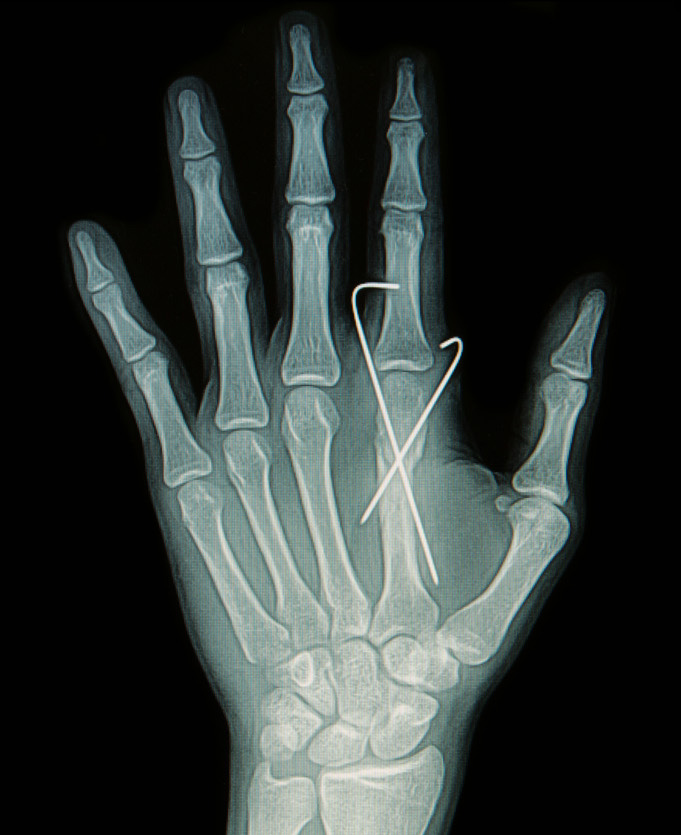
Metacarpal fractures require surgery to repair when the fractured pieces are unstable (won’t stay in place), or not healing properly with cast treatment. A regional block numbs the arm, and if the metacarpal can be set straight, we place metal wires through the skin and into the bone to keep it straight while healing. If the fracture is severe, we may need to make a small incision over the back of the hand to restore the alignment of the broken metacarpal directly and hold the pieces in place with a small metal plate and screws. Sometimes, treatment requires a second surgery after the bone heals to remove the plate and screws if they cause stiffness or feel uncomfortable under the skin.
 .
.