Bone Spurs and Cysts
What are bone spurs and cysts?
Bone spurs are sharp spikes of bone that form at the margins of joints with arthritis. Sometimes you can feel the bone spur as a hard lump under the skin. Bone spurs can happen on wrists, hands, thumbs and other joints.
A bone spur in the hand does not always cause pain, but it can sometimes lead to stiffness, tenderness, swelling or irritation around the affected joint. Bone cysts are small holes or cavities that form inside the bone and are usually found on imaging, such as an X-ray.
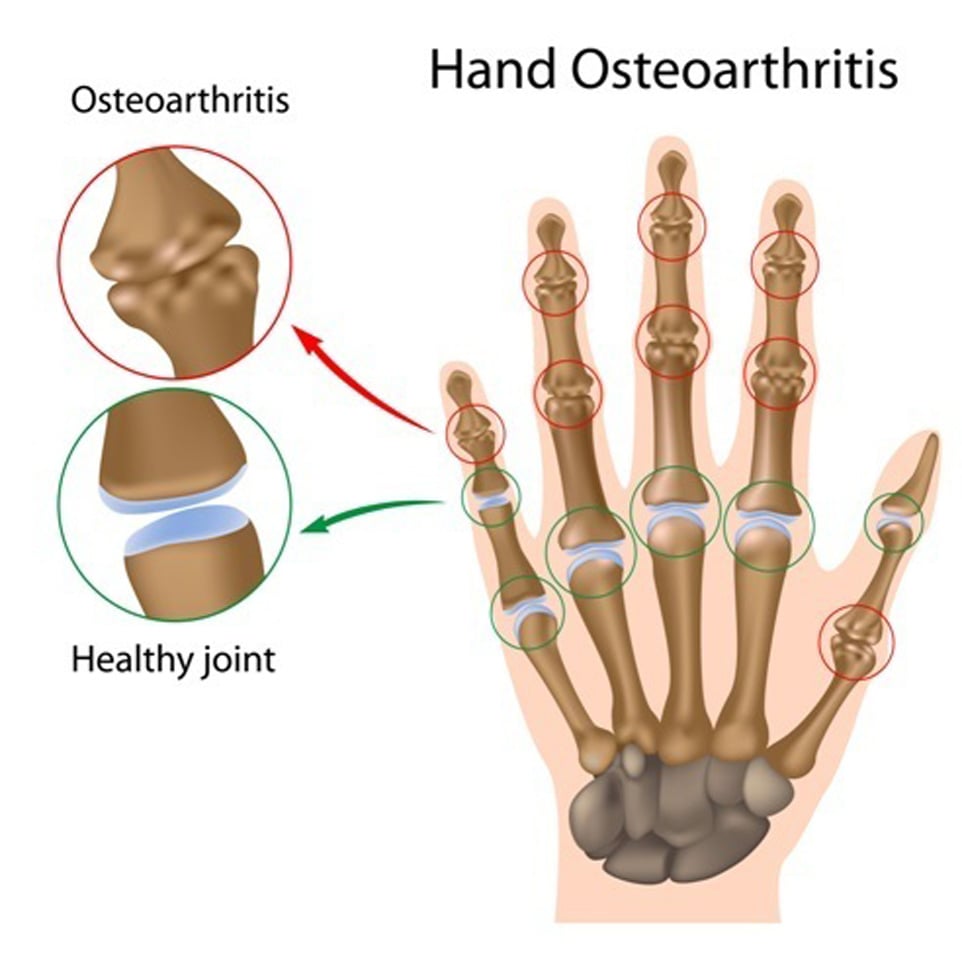 Understanding bone spurs and cysts
Bone cysts are just small holes or cavities that form inside the bone around arthritic joints. They also sometimes form spontaneously in healthy bone. These can’t be felt but are detectable on x-ray.
Arthritis literally means “inflamed joint”, and generally refers to any damage to the joints of the body. There are 36 joints in the hand and wrist, and several sites that commonly affected by arthritis. Osteoarthritis is the most common type and is a degenerative breakdown of the joints over time.
The CMC joint at the base of the thumb is commonly affected. Less common forms of arthritis include damage to the joint due to injuries (post-traumatic arthritis), and inflammatory arthritis (rheumatoid, gout, psoriatic).
Symptoms
Bone spurs and bone cysts do not always cause symptoms. Many are discovered during an X-ray performed for arthritis or another hand injury. When symptoms do occur, they are usually caused by irritation of nearby joints, tendons or soft tissues rather than the bone cyst itself.
Symptoms of bone spurs or cysts may include:
- Pain during gripping or pinching
- Joint stiffness
- Swelling around the joint
- A hard lump beneath the skin
- Tenderness when pressure is applied
- Reduced range of motion
- Snapping or catching of a tendon over a bone spur
- Weak grip strength
Bone spurs vs. ganglion cysts
Bone spurs and ganglion cysts can both appear as lumps around the hand or wrist, but they are very different conditions.
A bone spur is extra bone that develops around a joint, most commonly because of arthritis. It feels firm, does not move under the skin, and is visible on an X-ray.
A ganglion cyst is a fluid-filled sac that develops near a joint or tendon. Ganglion cysts are usually softer than bone spurs, may move slightly under the skin, and often change in size over time.
Because these conditions can look similar, a hand specialist can determine the cause of a lump through a physical examination and imaging studies.
Learn more about ganglion cysts
What causes bone spurs and cysts?
Bone spurs and cysts most commonly develop as part of the body's response to joint degeneration and arthritis. As cartilage wears away, the body may produce extra bone around the joint, forming a bone spur. Bone cysts may also develop beneath damaged joint surfaces as arthritis progresses.
Bone spurs and cysts may also develop after previous injuries or fractures that change the mechanics of a joint.
Common causes include:
- Osteoarthritis
- Previous fractures
- Joint injuries
- Chronic wear and tear
- Rheumatoid arthritis
- Psoriatic arthritis
- Gout
- Aging
Diagnosis
A specialist can often suspect a bone spur during a physical examination by evaluating the location of pain, joint stiffness and any visible or palpable lumps. Imaging is usually needed to confirm the diagnosis and determine whether arthritis is present.
X-rays are the most common imaging test and clearly show bone spurs, joint narrowing and many bone cysts. In some cases, advanced imaging such as CT or MRI may be recommended if symptoms are severe or another condition is suspected. Your clinician will also evaluate whether the lump could instead represent a ganglion cyst, tendon injury or another hand condition.
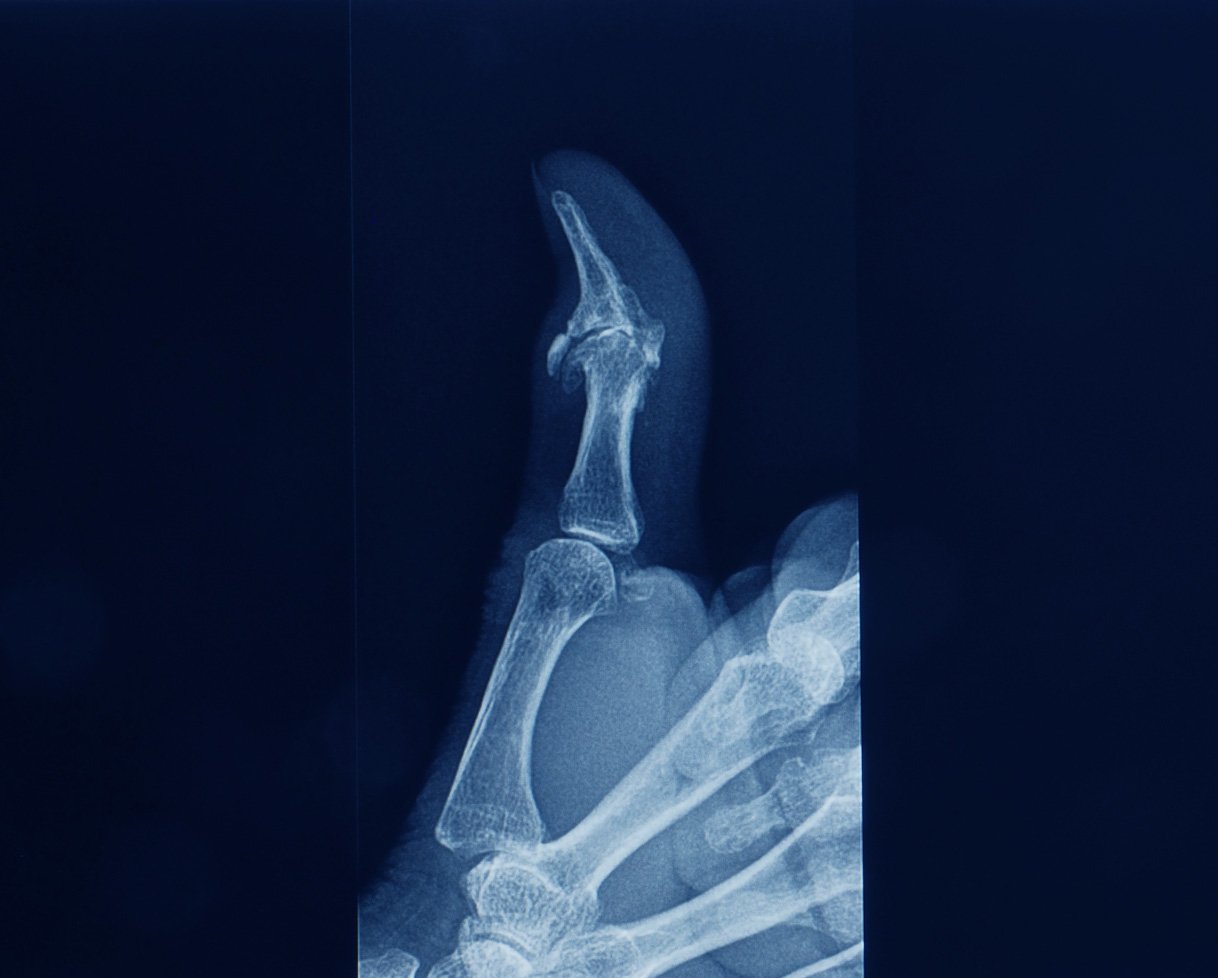
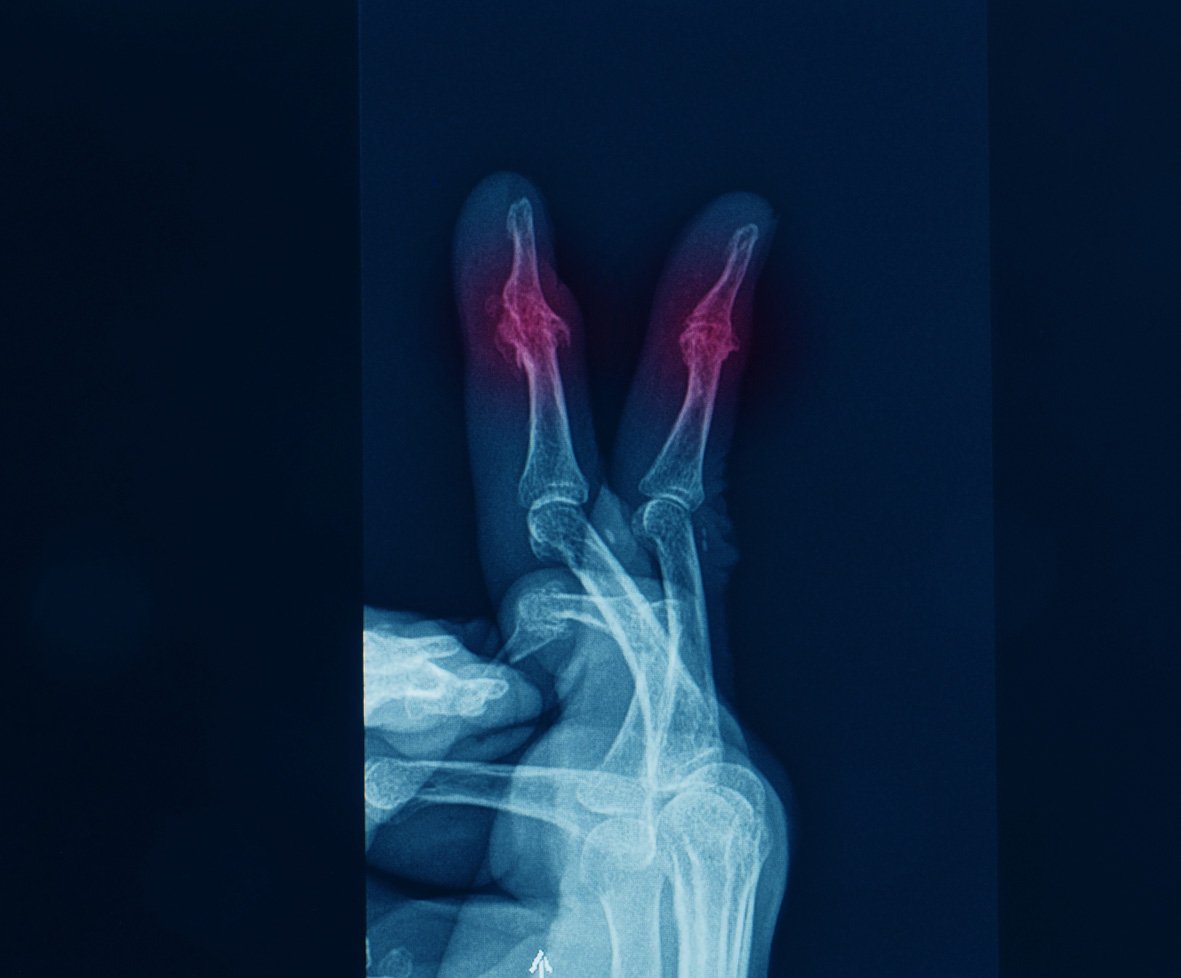
Photo left: Thumb x-ray with IP bone spurs
Photo right: X-ray of fingers with distal interphalangeal (DIP) arthritis
Why treatment matters
Bone spurs and bone cysts are often signs of an underlying joint condition such as osteoarthritis rather than the primary cause of pain. While many never require treatment, persistent pain, reduced hand function or a growing lump should be evaluated to determine whether arthritis, tendon irritation or another condition is responsible. Early evaluation can help preserve joint function and prevent symptoms from worsening over time.
Frequently asked questions about bone spurs and cysts
Can bone spurs go away on their own?
No, bone spurs do not go away without treatment. If they are not causing symptoms, they often do not require treatment. Many people live with bone spurs for years without needing surgery.
Are bone cysts serious or cancerous?
Most bone cysts found in the hand and wrist are benign, meaning they are likely not serious or cancerous. They often require no treatment unless they are associated with pain or another underlying condition.
Can bone spurs cause a lump on the hand or wrist?
Yes, a bone spur can create a hard, bony lump near a joint, particularly in the fingers, thumb or wrist. Unlike a ganglion cyst, which is filled with fluid and may feel soft or move under the skin, a bone spur is fixed to the bone and feels hard.
Can bone spurs be prevented?
Bone spurs cannot always be prevented, but maintaining healthy joints and treating arthritis early may help slow their development. Protecting your hands from repetitive stress and managing underlying joint conditions can also reduce your risk.
Can a bone spur get bigger over time?
Yes, bone spurs may gradually enlarge as arthritis progresses, although many remain stable for years. A growing bone spur is not always a cause for concern, but it should be evaluated if it becomes painful or begins limiting movement.
Take the next step
Our board-certified specialists are here to help you heal. They can often diagnose the problem in one visit and get you started with a personalized treatment plan. We offer a wide variety of treatment options.